
Education
The 38 flower remedies
of Dr. Edward Bach.
A complete system of natural emotional support — discovered between 1928 and 1936 in the English countryside, and still gently at work today.
What are they?
Nature’s gentle wisdom, distilled.
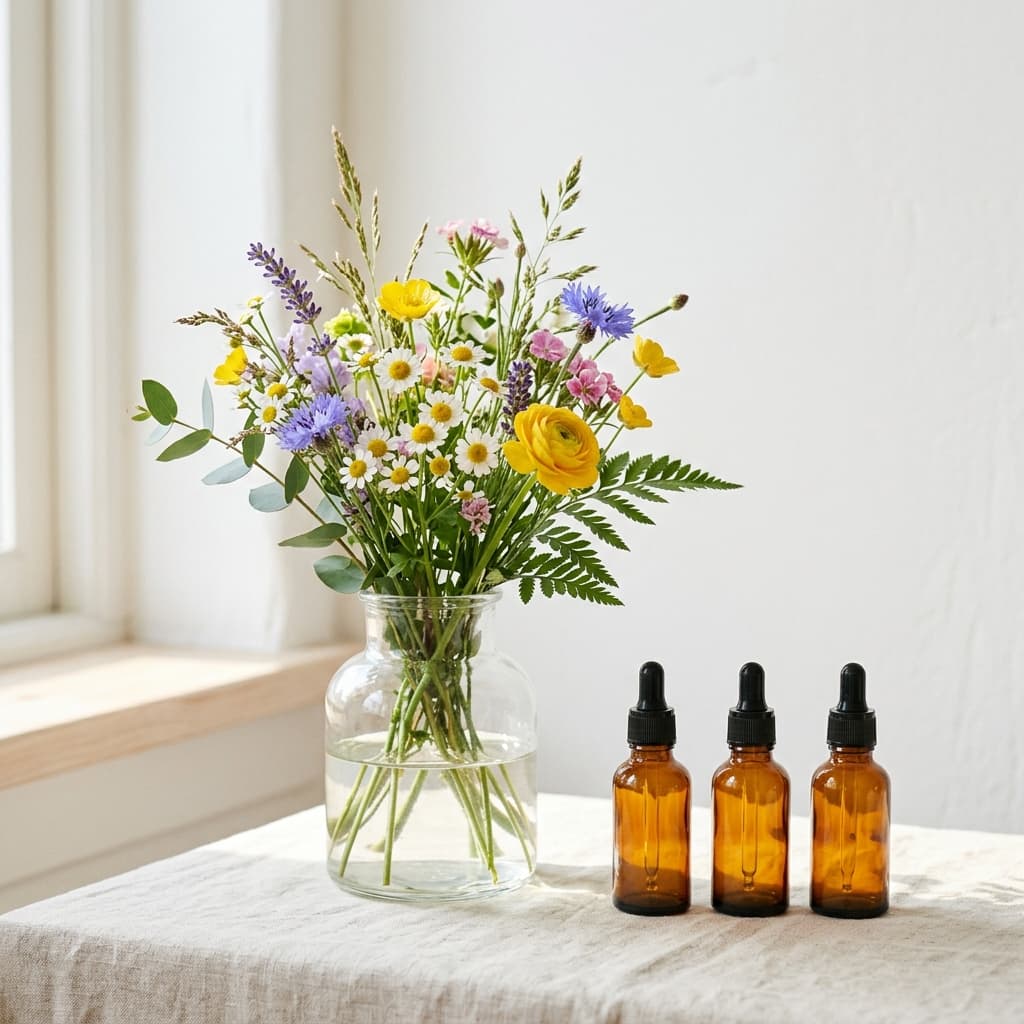
Bach Flower Remedies are a system of 38 natural plant-based preparations developed by Dr. Edward Bach, a respected English physician and bacteriologist, in the early 1930s. Each remedy is associated with a specific emotional state — fear, worry, indecision, loneliness, or longing for the past.
Rather than suppress what we feel, the remedies gently shift our inner balance, helping difficult emotions soften so that our natural equilibrium can return. They are completely safe, non-addictive, may be taken alongside any other treatment, and are equally gentle and effective when used for pets and plants.
Dr. Bach believed that emotional health was the foundation of all well-being, and that nature held quiet remedies for every state of mind. His system remains, almost a century later, one of the most beloved approaches in complementary practice.
How they work
Three simple principles.
Dr. Bach designed his system to be approachable — anyone, anywhere, can learn to choose remedies that fit how they feel right now.
01
Listen Inward
Notice the emotional tone of the moment. Are you anxious? Indecisive? Tired of pushing on? Each feeling has its remedy.
02
Choose & Blend
Up to seven remedies are combined in a small dropper bottle of spring water — a personal blend, made just for you.
03
Take Gently
Four drops, four times daily, on the tongue or in water. The remedies work quietly, often before you notice.
Seven Emotional Groups
The 38 remedies, organised by feeling.
Dr. Bach grouped the remedies into seven families of emotion — a beautifully clear map for finding the right support at the right time.
Group 01
For Fear
- Rock Rose
- Mimulus
- Cherry Plum
- Aspen
- Red Chestnut
Group 02
For Uncertainty
- Cerato
- Scleranthus
- Gentian
- Gorse
- Hornbeam
- Wild Oat
Group 03
Insufficient Interest
- Clematis
- Honeysuckle
- Wild Rose
- Olive
- White Chestnut
- Mustard
- Chestnut Bud
Group 04
Loneliness
- Water Violet
- Impatiens
- Heather
Group 05
Over-Sensitive
- Agrimony
- Centaury
- Walnut
- Holly
Group 06
Despondency & Despair
- Larch
- Pine
- Elm
- Sweet Chestnut
- Star of Bethlehem
- Willow
- Oak
- Crab Apple
Group 07
Over-Care for Others
- Chicory
- Vervain
- Vine
- Beech
- Rock Water
The complete collection
All 38 remedies, at a glance.
Each remedy addresses a specific emotional state — select any card to learn more about the gentle support it offers.
Rescue Remedy
A blend of five remedies — Cherry Plum, Clematis, Impatiens, Rock Rose, and Star of Bethlehem — to steady you through any sudden upheaval.
Agrimony
For mental torment hidden behind a cheerful, untroubled face.
Aspen
For vague, unaccountable fears — the unease without an obvious cause.
Beech
For intolerance of others, where small things become irritating.
Centaury
For those who find it hard to say 'no' and become drained by serving others.
Cerato
For those who doubt their own judgment and constantly seek the advice of others.
Cherry Plum
For fear of losing control of the mind — of doing dreadful things not wished and known to be wrong.
Chestnut Bud
For failure to learn from experience, repeating the same mistakes again and again.
Chicory
For possessive, over-protective love that demands attention and return of affection.
Clematis
For dreamy, absent-minded people who lack interest in the present moment.
Crab Apple
The cleansing remedy — for self-disgust or a feeling of being contaminated.
Elm
For those who feel overwhelmed by responsibility, when the task seems too great.
Gentian
For discouragement and despondency after a setback — easily disheartened.
Gorse
For deep hopelessness and despair — a settled belief that nothing more can be done.
Heather
For self-absorbed people who are constantly seeking companionship and need to talk about themselves.
Holly
For hatred, envy, jealousy, and suspicion — the remedy to open the heart to love.
Honeysuckle
For homesickness and nostalgia — those who live too much in the past.
Hornbeam
For tiredness and weariness at the thought of the day ahead — the 'Monday morning' feeling.
Impatiens
For impatience and irritability — those who are quick in thought and action, and want things done without delay.
Larch
For lack of confidence — those who expect failure and feel they will never succeed.
Mimulus
For known fears — fear of everyday things, shyness, and timidity.
Mustard
For deep gloom and depression that descends like a cold dark cloud, without apparent cause.
Oak
For those who struggle on despite exhaustion — brave, strong, and never giving up hope.
Olive
For complete exhaustion — mental and physical fatigue after a long period of strain.
Pine
For guilt and self-blame — those who reproach themselves, even for the mistakes of others.
Red Chestnut
For excessive worry and fear for the well-being of loved ones.
Rock Rose
For terror, panic, and extreme fright — the remedy for emergencies.
Rock Water
For self-denial and rigidity — those who are very strict with themselves in their daily living.
Scleranthus
For indecision — those who suffer from inability to choose between two things.
Star of Bethlehem
For shock and trauma — the comforter and soother of pains and sorrows.
Sweet Chestnut
For extreme anguish — when the heart feels it can endure no more.
Vervain
For over-enthusiasm and strong opinions — those with fixed ideas they are confident are right.
Vine
For dominant, inflexible people who are certain they know best and demand obedience.
Walnut
Protection during periods of change — a steadying companion through transitions.
Water Violet
For quiet, self-reliant people who may appear aloof or proud — they bear their grief in silence.
White Chestnut
For unwanted, repetitive thoughts — a restless, troubled mind that finds no peace.
Wild Oat
For uncertainty about one's direction in life — dissatisfaction from not following one's calling.
Wild Rose
For resignation and apathy — drifting through life without effort or joy.
Willow
For resentment, self-pity, and bitterness — when life feels unfair.
Health is our heritage, our right. It is the complete and full union between soul, mind and body.
— Dr. Edward Bach
Ready to experience them?
Find the remedies that meet you where you are.
A consultation is the gentlest way to begin — a quiet conversation, a personal blend, and a follow-up to see how it lands.